
Openings Sealed Against Air and Water
Custom Windows & Doors Installation in Bloomington for properties with outdated units, non-standard openings, or excessive energy loss
Air leaks around window frames create drafts strong enough to move curtains on windy days, while condensation forming between double-pane glass layers indicates seal failure that eliminates insulating value. VT Developments provides custom window and door installation in Bloomington for full replacement of units where thermal performance has degraded, frames have rotted from water infiltration, or existing dimensions don't match standard product sizes available through retail channels. The service becomes necessary when you feel temperature differences standing near windows during winter, notice frost accumulation on interior glass surfaces, or see daylight gaps around door jambs that allow insects and dust to enter conditioned spaces.
Replacement involves removing interior and exterior trim, extracting old window or door units without damaging surrounding siding or interior finishes, verifying rough opening dimensions, and installing new units with proper shimming, flashing, and sealant application that directs water away from framing. Custom sizing accommodates openings where previous remodeling, foundation settling, or non-standard construction created dimensions that don't align with manufacturer catalogs, requiring built-to-specification units rather than stock products.
Request a property evaluation to measure existing openings and identify energy-loss points.
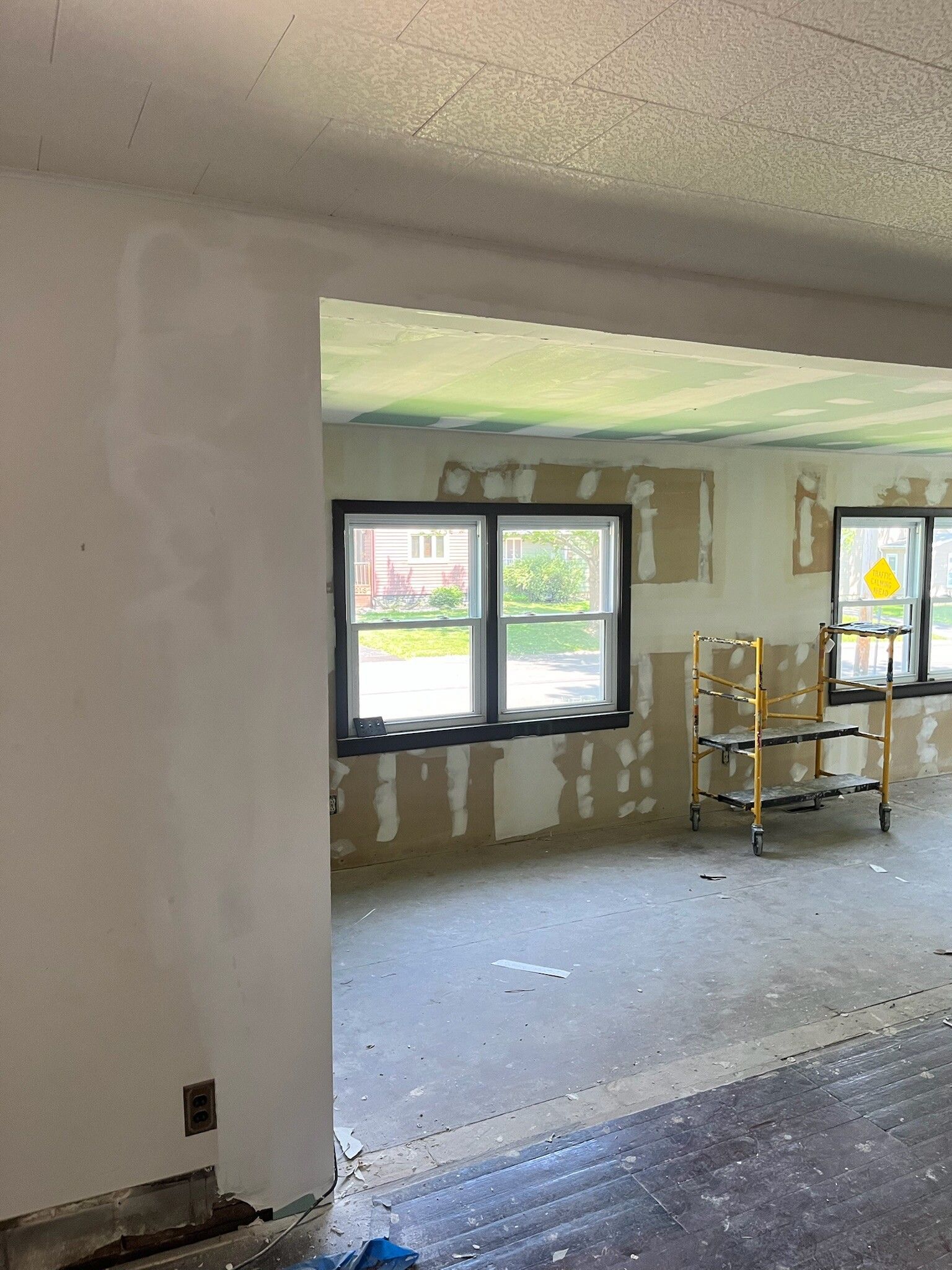
How Proper Installation Addresses Performance Problems
Energy-efficient windows use low-E glass coatings that reflect infrared heat back into rooms during winter while blocking solar heat gain during summer, and argon or krypton gas fills between panes provide better insulation than air alone. Installation quality determines whether these features deliver rated performance, as gaps between window frames and rough openings create thermal bypasses where insulation value drops to near zero regardless of glass technology. Proper flashing sequences overlap to shed water down and away from openings, preventing moisture from reaching wood framing where rot compromises structural integrity and creates pathways for continued water entry.
After installation completes, windows operate smoothly without binding or requiring force to latch, door thresholds seal completely against weatherstripping when closed, and interior surfaces near windows feel room temperature rather than radiating cold during Bloomington winters. Exterior caulk lines appear uniform without voids or gaps, trim sits flush against siding, and interior finish work conceals shims and gaps with casing that matches existing architectural style.
The service includes entry doors with multi-point locking systems that engage at top, middle, and bottom for security upgrades, patio doors with rollers engineered for smooth operation under panel weight, and sliding glass doors with tempered or laminated glass options that resist breakage. Security features include reinforced frames, impact-resistant glazing, and locks that cannot be manipulated from exterior access, while noise-reduction upgrades use laminated glass construction that dampens sound transmission from traffic or neighbors.
Questions Before Starting Your Project
Window and door replacement decisions involve understanding how installation quality affects long-term performance beyond product specifications alone.
What causes condensation to form between window panes?
Seal failure around the glass edge allows moisture-laden air to enter the space between panes, where temperature changes cause water vapor to condense on interior glass surfaces, indicating that insulating gas has escaped and thermal performance has dropped to that of single-pane glass.
How does custom sizing differ from standard window replacement?
Custom units are manufactured to exact rough opening dimensions measured on-site, eliminating the gaps and shimming compromises required when forcing standard sizes into openings that don't match catalog increments, resulting in better thermal performance and cleaner installation appearance.
What flashing and weatherproofing steps prevent water damage during installation in Bloomington?
Installation includes applying self-adhering flashing membrane along the sill before setting the unit, wrapping side jambs with flashing that overlaps the sill membrane, and integrating head flashing with building wrap or housewrap so water drains down and away from the opening rather than behind the window frame.
When do entry doors require threshold replacement versus adjustment?
If the existing threshold has cracked, rotted, or worn smooth where weatherstripping cannot seal properly, replacement provides a fresh sealing surface, but if the door has simply settled or shifted, adjusting hinge positions and threshold height can restore proper compression against weatherstripping without full replacement.
How do low-E coatings affect window performance beyond basic insulation?
Low-E coatings selectively block infrared wavelengths while allowing visible light transmission, reducing heat gain during cooling seasons and reflecting interior heat back into rooms during heating seasons, which lowers HVAC load more effectively than simply adding pane layers.
VT Developments handles professional sealing and weatherproofing installation to ensure units perform as rated throughout their service life. Arrange an on-site consultation to discuss opening dimensions, performance priorities, and material options for your Bloomington home.