
Exterior Surfaces That Stop Air Infiltration
Siding Installation & Exterior Upgrades in Bloomington for homes with cracked panels, warped boards, or failing insulation performance
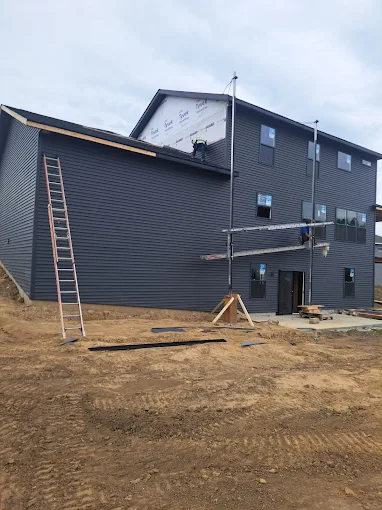
Warped siding boards that no longer lie flat against wall sheathing allow wind-driven rain to reach building wrap and framing, while cracks in vinyl panels create thermal bridges where conditioned air escapes and outdoor temperatures penetrate interior spaces. VT Developments installs vinyl, fiber cement, and wood siding in Bloomington for full exterior remodeling, replacement of storm-damaged materials, and energy-efficient upgrades that reduce heating costs during cold months. This work becomes necessary when you notice gaps between siding and trim, panels that have pulled away from fasteners, or utility bills that have increased without corresponding changes in thermostat settings.
Installation involves removing existing siding to expose sheathing and building wrap, replacing any moisture-damaged sections, installing new water-resistant barriers, and securing siding panels with proper overlap and expansion gaps that accommodate temperature-driven material movement. Fiber cement boards require different fastening patterns than vinyl panels because material weight and thermal expansion coefficients differ significantly, affecting how each system responds to Bloomington's seasonal temperature swings.
Arrange an exterior assessment to identify failing sections and insulation gaps.
Why Material Selection Affects Long-Term Performance
Vinyl siding resists moisture damage and requires minimal maintenance but expands and contracts noticeably with temperature changes, requiring fasteners that allow horizontal movement to prevent buckling during summer heat. Fiber cement boards offer superior impact resistance and dimensional stability through freeze-thaw cycles, though installation requires carbide-blade cutting tools and moisture management during curing. Wood siding provides traditional appearance and accepts stain or paint finishes but demands regular sealing to prevent rot where water contacts end grain at board edges and corner joints.
Once installation finishes, you see uniform panel alignment without waves or bulges, tight seals around window and door openings where J-channel directs water away from trim, and corner treatments that overlap correctly to shed rain rather than trapping moisture. Interior walls feel noticeably warmer during winter months when insulation upgrades accompany siding replacement, and drafts around electrical outlets and baseboards diminish as air sealing improves.
The service includes trim, soffit, and fascia installation that completes the weather envelope, with soffit vents sized to balance attic airflow and prevent moisture accumulation that damages roof decking. Custom color matching ensures replacement sections blend with existing siding on homes where partial replacement addresses localized storm damage without requiring whole-house re-siding, though weathering and UV fading make perfect color continuity difficult on siding older than five years.
Answers to Frequent Service Questions
Exterior upgrade decisions often involve balancing upfront material costs against maintenance requirements and expected lifespan under local weather exposure.
What causes vinyl siding to warp or crack after installation?
Improper fastening that drives nails too tight prevents thermal expansion, causing panels to buckle when temperatures rise, while impact damage from hail or thrown objects creates cracks that propagate along panel length, and low-grade vinyl formulations become brittle after years of UV exposure common in Bloomington summers.
How does fiber cement siding improve energy efficiency compared to vinyl?
Fiber cement boards are denser and thicker than vinyl panels, providing better thermal mass that resists rapid temperature transfer, and when paired with exterior foam insulation during installation, the system reduces thermal bridging through wall studs that accounts for significant heat loss in older homes.
What preparation work happens before new siding installation begins?
Existing siding is removed and disposed of, sheathing is inspected for rot or water damage requiring replacement, building wrap or housewrap is installed to create a continuous moisture barrier, and windows and doors are flashed properly to integrate with the new water management system.
When should siding repair be chosen over full replacement?
If damage is localized to specific areas from storm impact or isolated moisture intrusion, and the surrounding siding remains structurally sound with years of expected life remaining, targeted repair avoids the cost of whole-house replacement while restoring weather protection where it has failed.
How long does siding installation typically take for an average home?
Timeline depends on home size, material type, and the extent of sheathing repair needed, but most residential projects require weather-protected windows and doors to remain functional throughout the work, with staging planned to maintain building weatherproofing even when sections are temporarily exposed.
VT Developments provides soft-close hardware upgrades and premium finish options for cabinetry projects requiring coordinated exterior and interior remodeling timelines. Request a consultation to review material options and discuss energy-efficiency improvements for your Bloomington property.